From across the room, a budget cabinet and one of the best quality cabinets on the market can look nearly identical. The differences show up five years later: sagging shelves, drawers that stop gliding, paint cracking at the joints. The good news is that you can spot quality in a showroom in a few minutes if you know where to look.
Here are the eight things we'd check on any cabinet, ours included.
1. The box: plywood vs. particleboard
The cabinet box carries the countertop, the sink and everything you store. Plywood is lighter and stronger than particleboard, holds screws better, and is far more forgiving if a leak ever happens under the sink. Particleboard swells when it gets wet, and it doesn't shrink back.
What to look for: plywood sides, bottom and back. Vita boxes are 5/8″ Grade A plywood with I-beam support.
2. The door frame joinery
A five-piece door is four frame pieces around a center panel, and how those corners are joined decides whether the door stays square. Mortise-and-tenon joints, where a tongue on one piece is glued into a slot in the other, are the strongest traditional method.
What to look for: a solid wood frame with tight, flush corners. Every Vita door uses a solid wood frame with mortise-and-tenon joints.
3. The drawer boxes
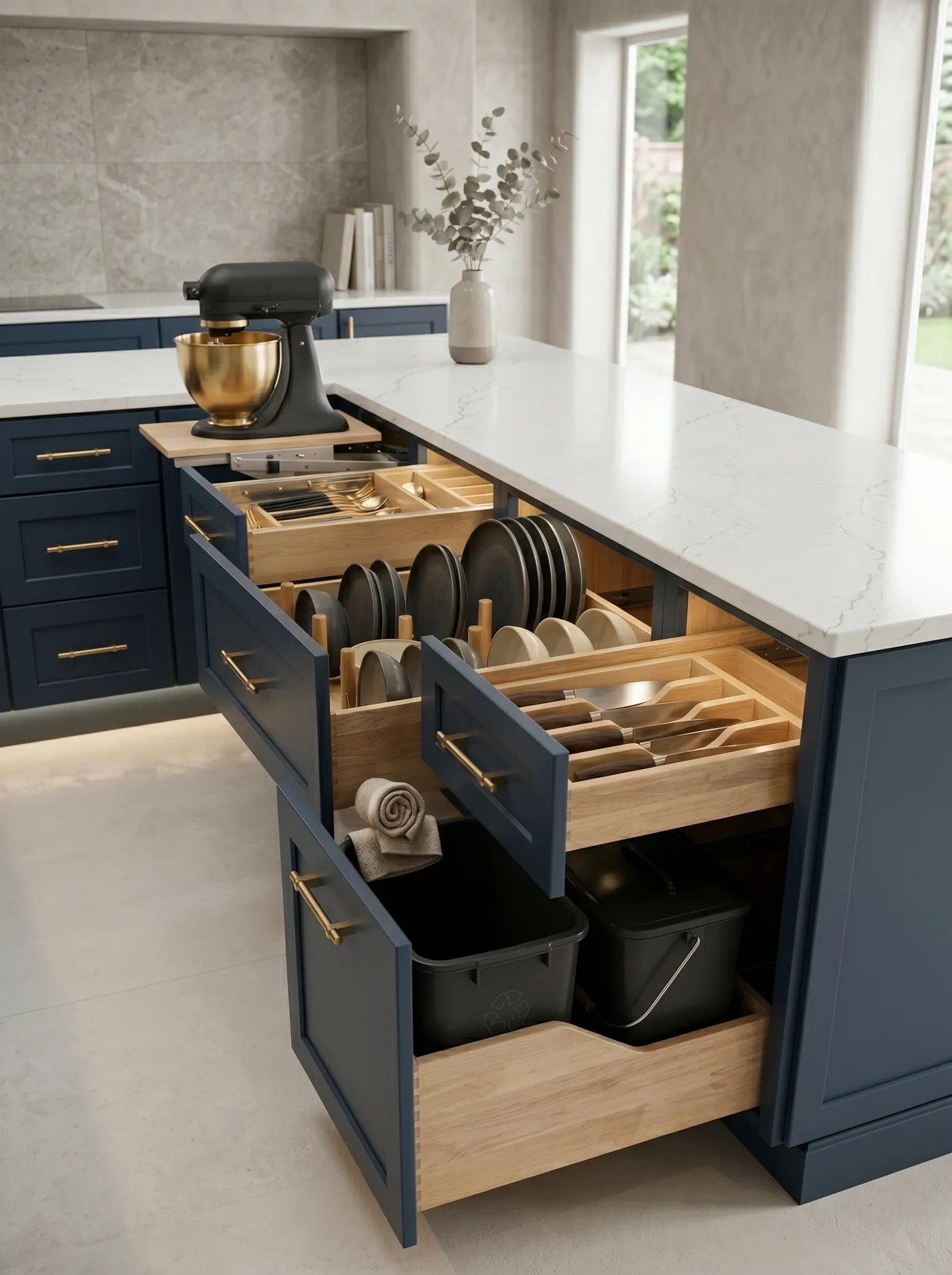
Pull a drawer all the way out and look at the corners. Stapled or glued particleboard drawers loosen with daily use. Dovetail joints interlock and hold up under load.
What to look for: solid wood drawer boxes with dovetailed corners. Ours are solid rubberwood, dovetailed and finger-jointed.
4. Glides and hinges
Hardware is where cheap cabinets save money, and where you notice it every single day. Side-mount glides that only open three-quarters of the way waste the back of the drawer, and hinges without adjustment leave doors crooked after the first season.
What to look for: full-extension, undermount, soft-close glides and soft-close hinges that adjust in several directions. Vita uses DTC full-extension undermount soft-close glides and DTC 6-way adjustable soft-close hinges on every cabinet, with no upgrade to specify.
5. The finish
Painted cabinets are popular, but paint over a solid wood panel can show hairline cracks where the panel meets the frame, as wood expands and contracts with the seasons. Stained cabinets should show even color with the grain still visible.
What to look for: on painted doors, a stable core material; on stained doors, real wood. Vita's painted doors use Premium HDF (about 800 kg/m³, denser than solid wood), which doesn't expand, contract or absorb moisture, so the paint stays smooth with virtually no hairline cracks. Our stained doors are solid wood.
6. Interior and side finish
Open the door. Is the inside a matching finish, or bare unfinished board? Are the exposed ends finished, or will you need to buy panels to cover them?
What to look for: a matching finished interior, prefinished sides and edgebanded boxes. On Vita cabinets these are standard, not upgrades.
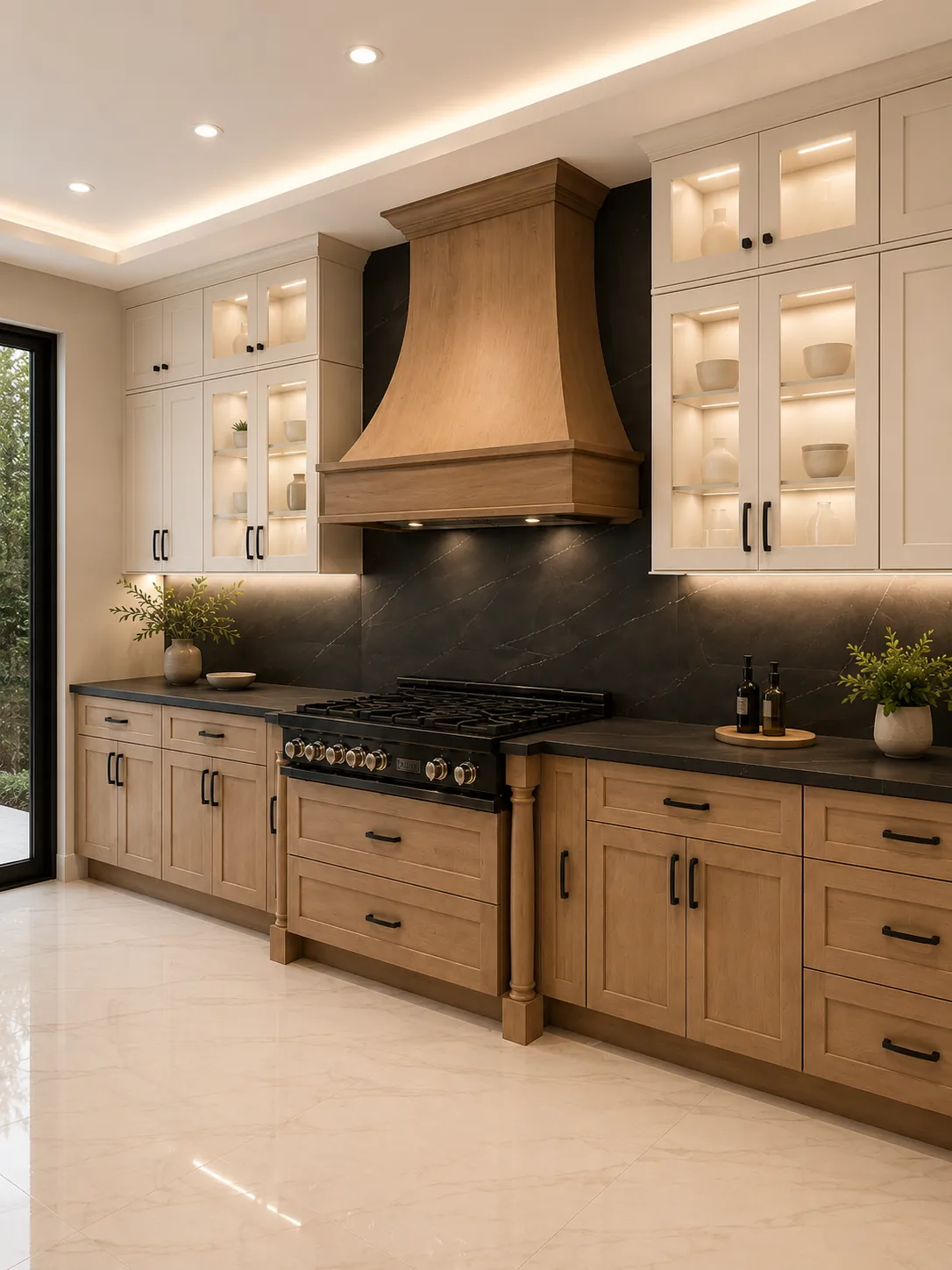
7. Shelves and shelf supports
Thin shelves on plastic clips bow under a stack of dinner plates. Fixed shelves can't adapt when your storage needs change.
What to look for: adjustable shelves on metal supports. Vita cabinets use adjustable metal shelf supports, so you can reconfigure as your kitchen changes.
8. Certification, warranty and service
Quality you can't see should still be verifiable. KCMA certification means a cabinet line has been independently tested for structural strength, door and drawer durability, and finish resistance to heat, moisture and common kitchen substances. A real warranty shows the maker expects the cabinet to last, and good service means a damaged part doesn't stall your project.
What to look for: KCMA certification, a written warranty and a supplier that can actually replace parts quickly. Vita cabinetry is KCMA certified and covered by a limited lifetime warranty, and missing or damaged items get an answer and a replacement within 48 hours.
Quality checklist at a glance
| Check | Good sign | Vita standard |
|---|---|---|
| Box | Plywood | 5/8″ Grade A plywood, I-beam support |
| Door frame | Solid wood, mortise and tenon | Solid wood, mortise and tenon |
| Drawers | Solid wood, dovetailed | Solid wood, dovetailed and finger-jointed |
| Glides | Full-extension, soft-close | DTC undermount, full-extension, soft-close |
| Hinges | Soft-close, adjustable | DTC 6-way adjustable, soft-close |
| Painted finish | Stable core, no cracking | Premium HDF, about 800 kg/m³ |
| Interior | Finished and matching | Matching finished interior, prefinished sides |
| Shelves | Adjustable, metal supports | Adjustable metal shelf supports |
| Proof | Certification and warranty | KCMA certified, limited lifetime warranty |
For more on how our cabinets are built, see Cabinet Construction. To keep them looking new, read our cabinet care guide.
Does best quality mean most expensive?
No. A cabinet's price often reflects the showroom, the brand and the distribution chain as much as the cabinet itself. Vita is a wholesale distributor: we sell from stock through authorized dealers, which keeps the materials above standard without a custom-cabinet price. Compare the checklist, not the price tag, then see our best-selling styles in person at a dealer near you.
Frequently asked questions
What is the best material for kitchen cabinets?
For the box, plywood. For doors, a solid wood frame with either a solid wood panel (for stained finishes) or a dense, stable panel such as HDF (for painted finishes).
How long do good quality cabinets last?
Well-built plywood cabinets with quality hardware last for decades. Hinges and glides can be adjusted or replaced long before the box wears out.
What does KCMA certified mean?
The Kitchen Cabinet Manufacturers Association runs a certification program that tests cabinets against the ANSI/KCMA A161.1 performance standard, covering structural integrity, door and drawer operation, and finish durability.
Are American or European cabinets better quality?
Neither style is better by default. Quality comes from materials and hardware, not from framed or frameless construction. See European vs. American style cabinets for how the two compare.