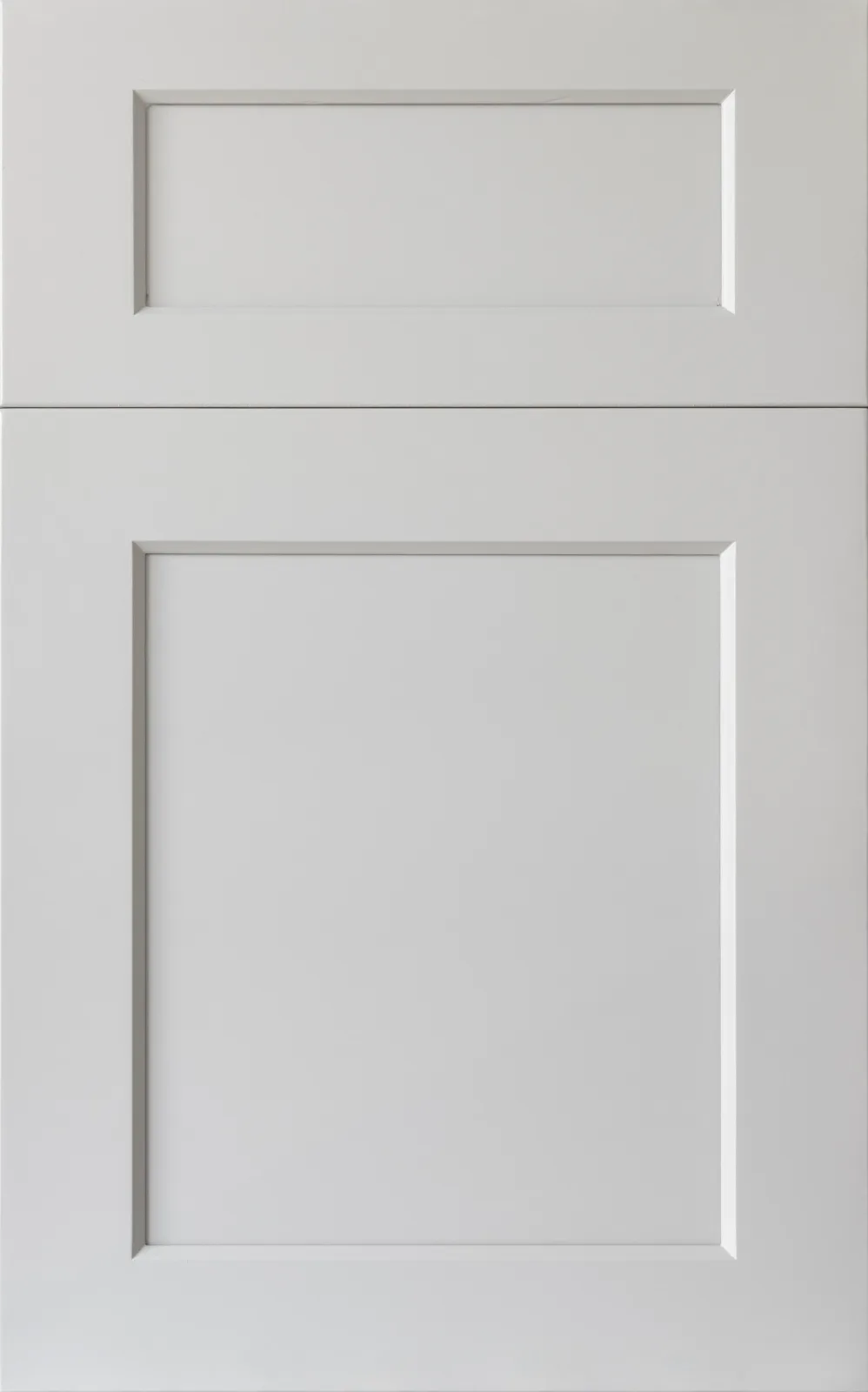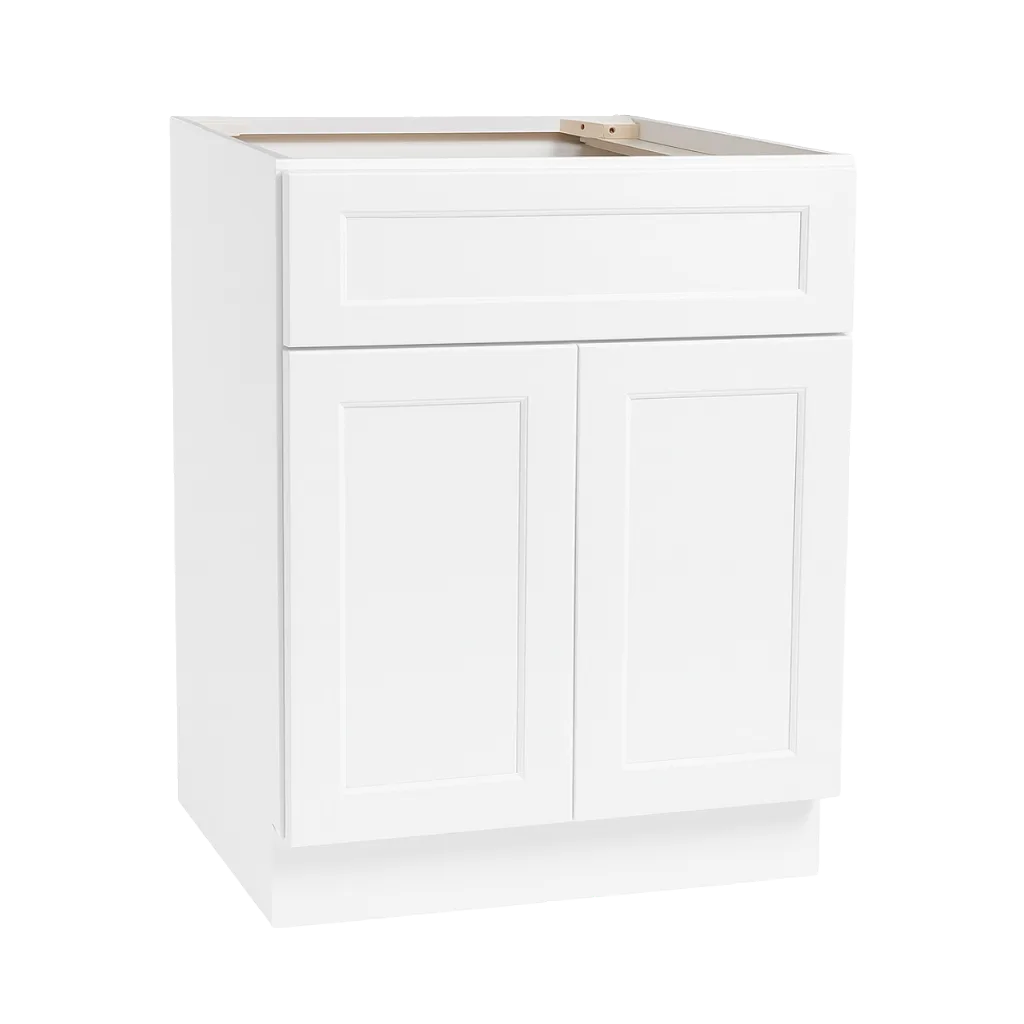
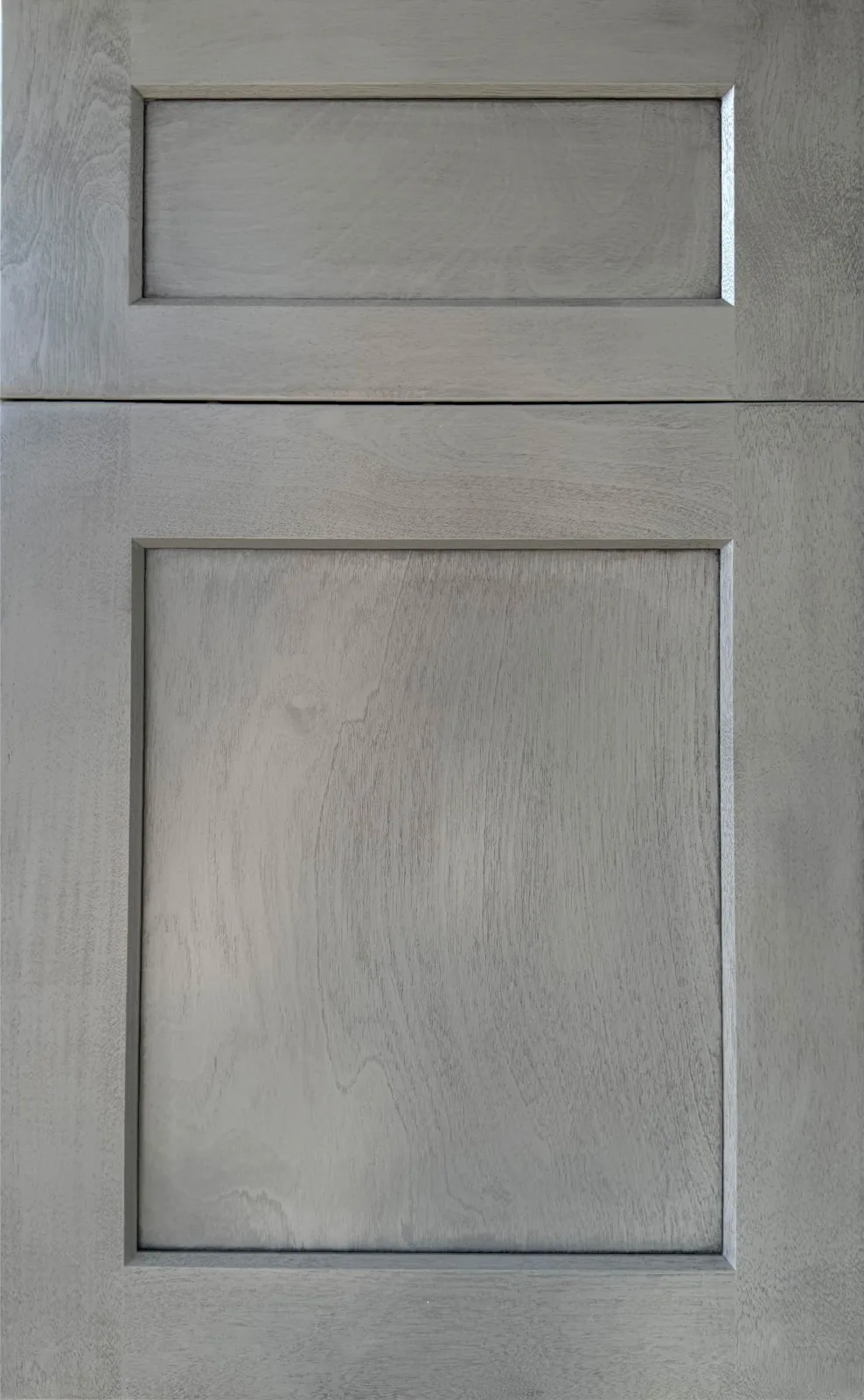
Walk into any showroom and the wall of doors is the first thing that stops people. Nine fronts, two series, a fan deck of finishes — and a decision that will stare back at you every morning for the next fifteen years. The good news: designers don't agonize over this choice, because they run it through a short sequence. Room first, profile second, material third, finish last. Do it in that order and the door practically picks itself.
1. Start with the room, not the door.
Before you look at a single profile, look at what the kitchen is doing. Low ceilings and small windows want light, low-contrast fronts that recede. Big open plans can carry deeper color and stronger shadow lines. A galley that's all cabinet needs calm; an island-centered space can afford a statement. Write one sentence — "this room needs to feel bigger" or "this room can handle drama" — and let it veto everything that follows.
2. Profiles: flat, shaker, or detailed.
Every door on the market lands in one of three families. Flat slabs read modern, wipe clean in one pass, and live or die by their finish quality. Shaker — a five-piece frame around a flat center panel — is the safe-forever choice; it reads traditional next to a farmhouse table and modern next to matte-black hardware. Detailed profiles with stepped edges or raised panels bring formality and shadow, and they reward rooms with generous light.
The Vita line leans deliberately into the middle: most of our nine doors are shaker-family fronts with different rail widths and edge details, because that's the family that survives trend cycles. If you're torn, a narrow-rail shaker is the coin that lands on its edge — it goes both ways.
"Pick the door for the room you have, not the room on your saved board. Light is the difference between the two."
3. Painted HDF or stained solid wood?
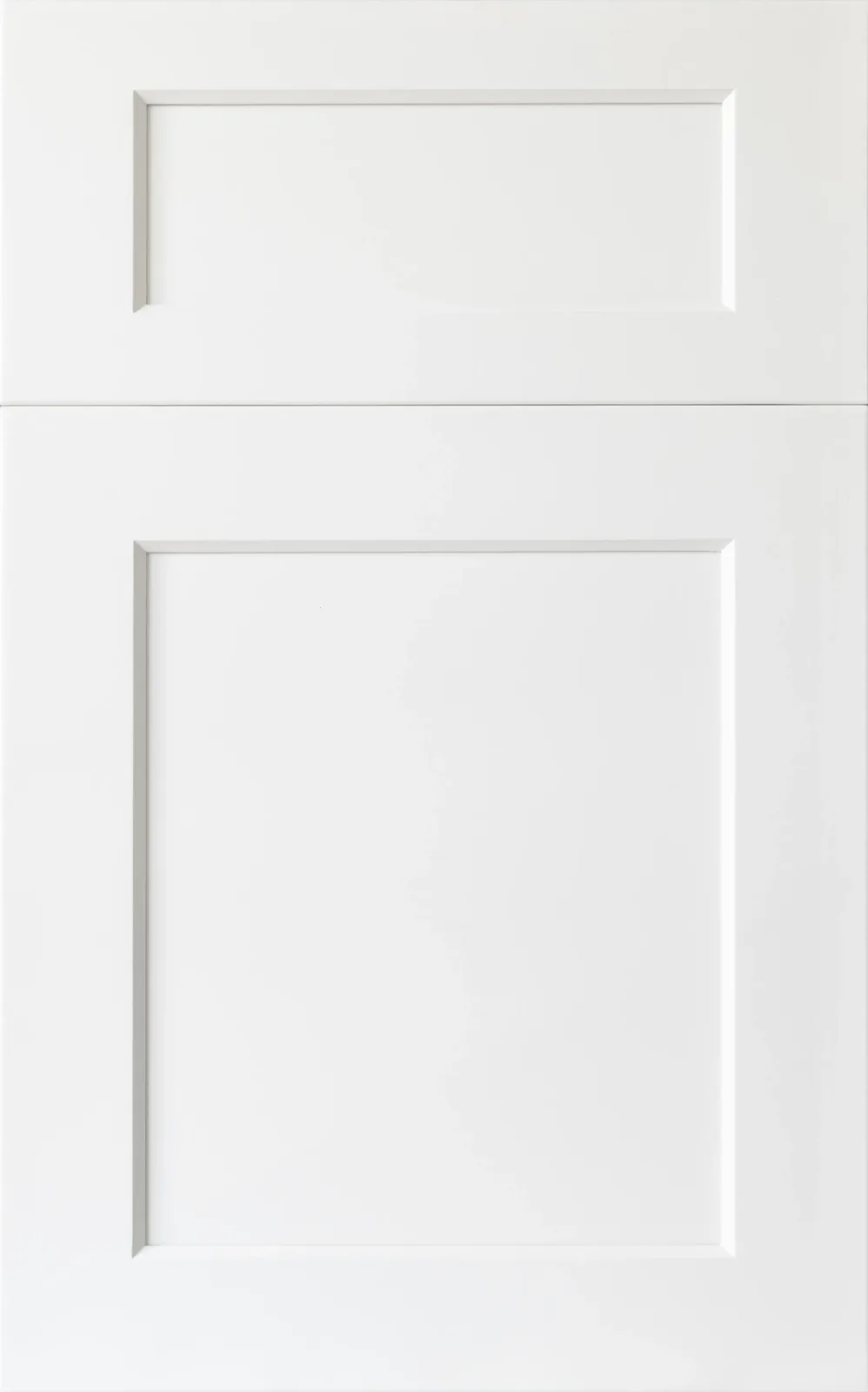
Vita builds fronts two ways, and the split is simple. Painted doors are premium HDF — a dense, furniture-grade board that takes paint more smoothly than solid wood and won't telegraph joint lines through the finish when seasons change. If you want color — whites, grays, blues, greens — painted HDF is the better engineering, full stop.
Stained doors are solid wood, because stain is about grain and grain is the whole point. Stain soaks in, highlights figure, and ages with character. If you want to see the tree, choose the stained side of the palette.
Both builds hang on the same boxes: 5/8″ Grade A plywood, dovetail drawers, soft-close everything. The door decides the look; the box quality is non-negotiable either way.
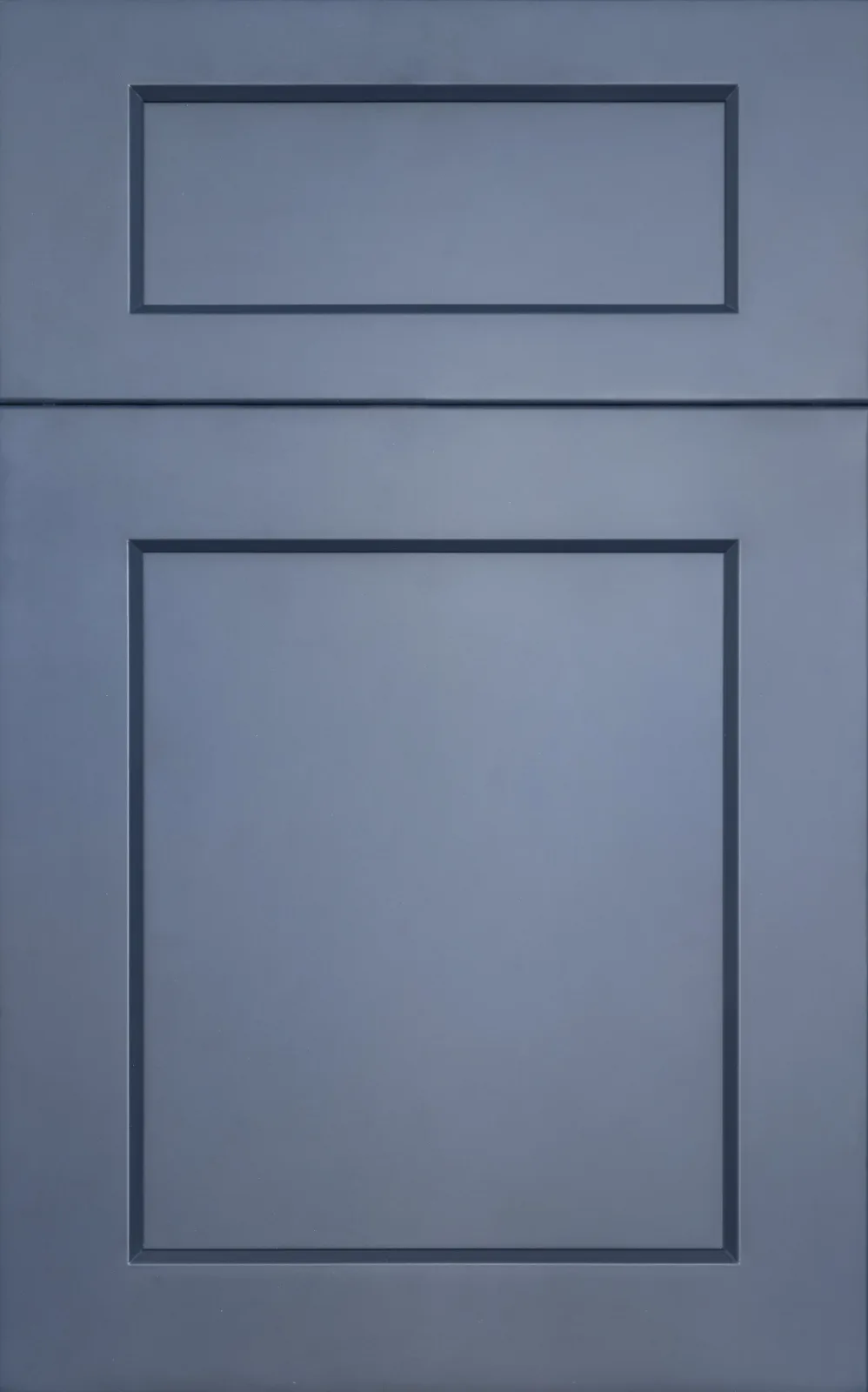
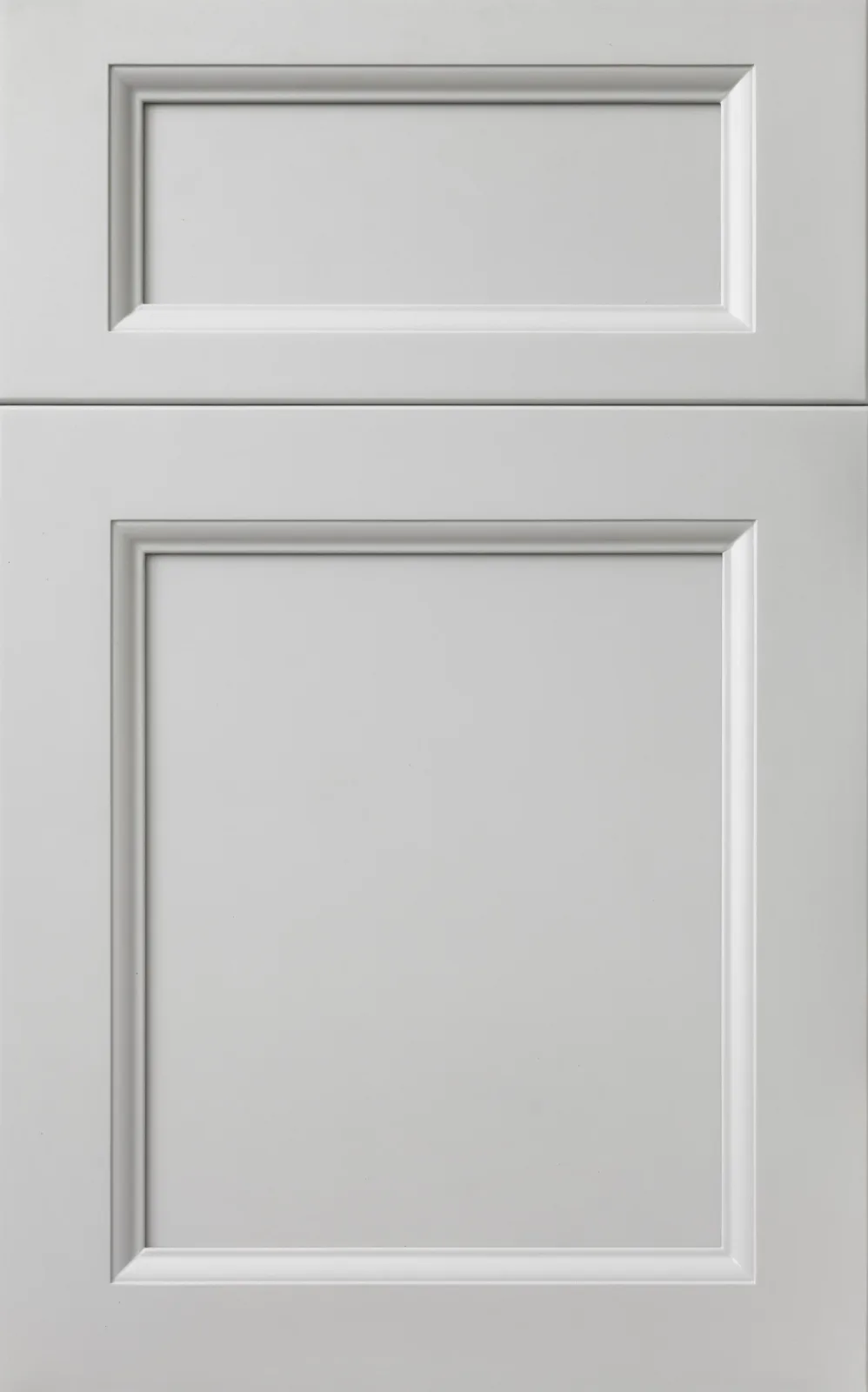
4. Emerald or Trillion: two series, one house.
Our palette splits into two series. Emerald is the broader family — whites, grays, blues and stained woods that anchor most projects. Trillion is the tighter, design-forward edit. They're built to mix: a Trillion island inside an Emerald perimeter is the most-ordered two-tone combination we ship, because the tones are tuned to sit next to each other.
A practical rule for two-tone: keep the perimeter quiet and spend the contrast in one place — the island, or a tall pantry wall. Two statements in one room argue with each other.
5. Test in your light. Always.
Showroom lighting is designed to flatter. Your kitchen's north-facing window at 7 a.m. is not. Every Vita door is available as a sample door — order the two finalists, lean them against the wall the cabinets will actually occupy, and look at them at morning, noon and night for three days. The winner is usually obvious by the second evening. It's the cheapest insurance in the entire project.
The 60-second checklist
- One sentence about the room — brighter, calmer, or bolder — and let it veto everything.
- Shaker if you're unsure; it survives every trend cycle it's ever met.
- Color → painted Premium HDF. Grain → stained solid wood. Don't cross the streams.
- Two-tone: quiet perimeter, one statement zone, tones from the same house.
- Order sample doors and audition them in your own light for three days.
Choose in that order — room, profile, material, finish — and the wall of doors stops being overwhelming. It becomes a short conversation with two or three candidates, and one of them will simply belong to your room in a way the others don't.